Which Carbon Steel 2 Bolts Hose Clamp Delivers Reliable Industrial Performance?
Choosing the right hose clamp is essential for maintaining secure connections, preventing fluid leakage, and reducing maintenance costs in industrial piping and fluid transfer systems. A carbon steel 2 bolts hose clamp is designed to provide strong, adjustable fastening through a two-bolt tightening structure. Its practical design makes it suitable for demanding applications where dependable clamping force and stable hose connections are important.
This guide explores its construction, material characteristics, working principles, applications, selection criteria, and purchasing considerations to help distributors, equipment manufacturers, and industrial buyers make informed decisions.
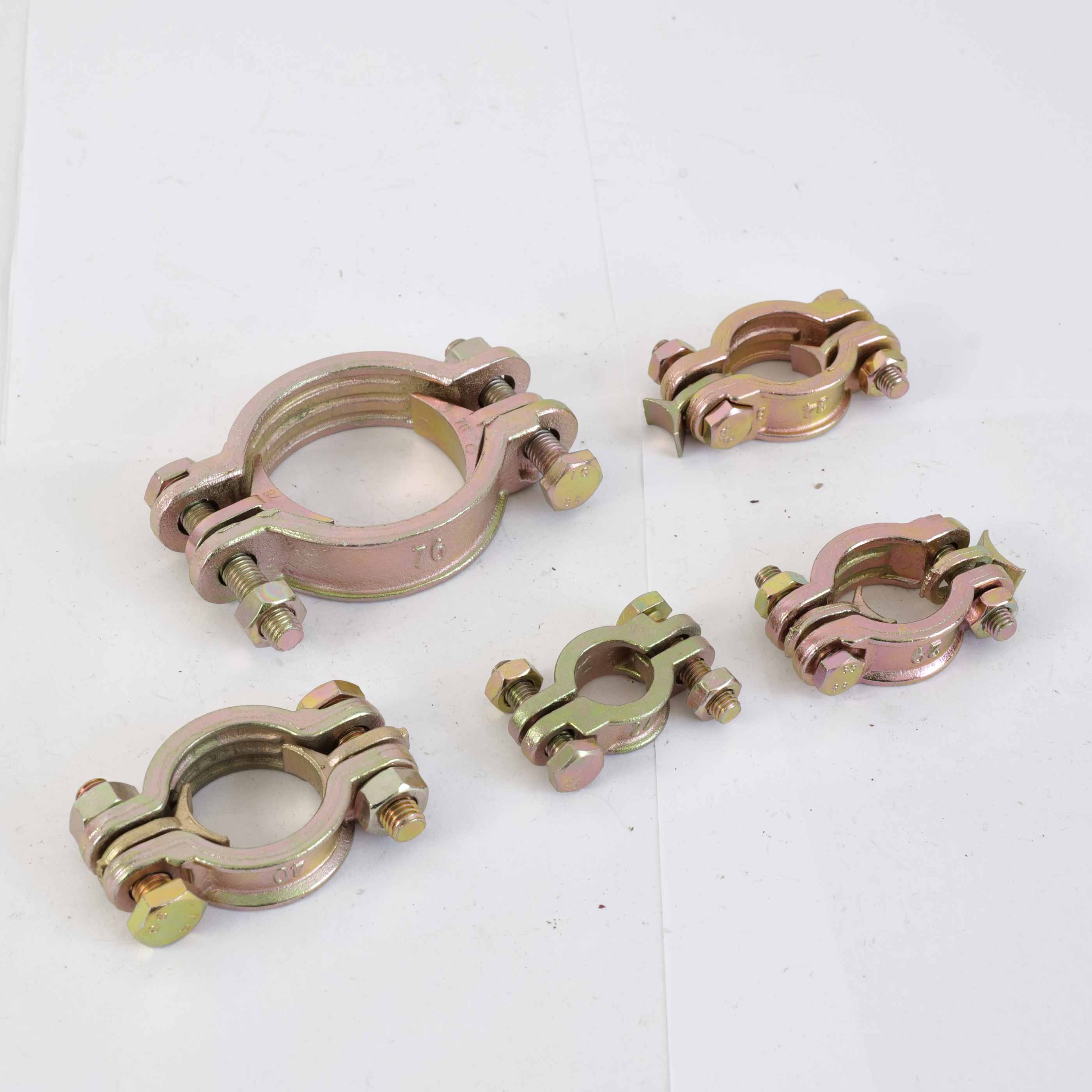
1. Understanding Carbon Steel 2 Bolts Hose Clamps
A hose clamp is a mechanical fastening device designed to hold a flexible hose securely against a connecting pipe, fitting, or other cylindrical surface. It helps prevent the hose from slipping off and supports a stable connection during normal operating conditions.
A carbon steel 2 bolts hose clamp uses a metal band and two tightening bolts to create clamping pressure. Compared with simpler single-screw designs, the two-bolt arrangement offers two tightening points, which can help provide a more controlled and balanced fastening effect when the clamp is correctly installed.
This type of clamp is commonly considered for industrial equipment, fluid transportation systems, machinery connections, and other applications that require a robust mechanical fastening solution.
Important distinction: A two-bolt hose clamp is not automatically suitable for every high-pressure hose system. Its actual performance depends on its dimensions, construction, material grade, fastening design, hose characteristics, and verified working specifications.
What Makes This Clamp Different?
The most recognizable feature is its two-bolt tightening arrangement. Rather than relying on one fastening point, the design uses two bolts to secure the band. This can improve tightening control and make the clamp useful for larger hose diameters or applications requiring substantial fastening force.
For industrial buyers, the key is not simply choosing a clamp with two bolts. The clamp must also match the hose diameter, wall thickness, fitting geometry, and working environment.
2. How Does the Two-Bolt Structure Work?
The working principle is straightforward. The metal band surrounds the outside of a hose, while the two bolts tighten the clamping assembly. As the bolts are tightened, the band contracts and applies radial pressure to the hose surface.
The Basic Clamping Process
- Positioning: The clamp is placed around the hose near the connection point.
- Initial tightening: The two bolts are gradually tightened to reduce the band's internal diameter.
- Pressure distribution: The band applies pressure around the hose circumference.
- Connection stabilization: The hose is held more securely against the fitting, helping reduce movement and leakage risks.
For reliable performance, tightening should be controlled rather than excessive. Uneven tightening may cause the band to sit incorrectly, while excessive force can damage the hose, deform the clamp, or affect the fitting.
Why Are Two Tightening Points Important?
The two-bolt arrangement provides additional tightening control. When both bolts are tightened evenly, the clamp can maintain a more balanced position around the hose. This is particularly useful when working with larger assemblies or connections that require a firm mechanical hold.
However, the actual pressure distribution depends on the band's geometry, its stiffness, the fastening mechanism, and the flexibility of the hose. Two bolts alone do not guarantee uniform pressure or a leak-proof connection.
3. Why Is Carbon Steel Used?
Carbon steel is widely used in industrial fastening products because of its mechanical strength, manufacturing versatility, and cost efficiency. For hose clamps, it provides a practical material option when the application requires a durable metal structure and the operating environment is compatible with the selected surface finish.
Mechanical Strength Carbon steel can provide the structural strength required for robust clamping components when the material grade and design are properly selected.
Cost Efficiency It is generally an economical material choice for industrial buyers managing equipment and maintenance budgets.
Manufacturing Flexibility It can be processed through common metalworking operations, supporting different clamp dimensions and structural designs.
Surface Treatment Options Protective finishes can help improve corrosion resistance in suitable operating environments.
The Importance of Surface Protection
Although carbon steel offers useful mechanical properties, it can corrode when exposed to moisture, chemicals, or aggressive environmental conditions. Therefore, surface treatment is an important consideration.
Depending on the product specification, possible protective finishes may include zinc plating or other suitable protective coatings. Buyers should confirm the actual finish, coating requirements, and corrosion resistance expectations with their supplier.
For outdoor installations, humid environments, or applications involving chemical exposure, material and coating selection should be evaluated carefully. In particularly corrosive environments, stainless steel or another corrosion-resistant material may be more appropriate.
4. Main Structural Components and Their Functions
Understanding the main components makes it easier to evaluate product quality and identify potential problems before purchasing.
| Component | Main Function | What Buyers Should Check |
|---|---|---|
| Clamping Band | Wraps around the hose and applies radial fastening pressure. | Thickness, width, material, and edge finish. |
| Two Bolts | Provide the tightening force needed to secure the clamp. | Thread quality, dimensions, strength, and corrosion protection. |
| Fastening Housing | Supports the bolt assembly and transfers tightening force. | Structural integrity, alignment, and manufacturing quality. |
| Nut or Threaded Connection | Engages with the bolt to create and maintain fastening pressure. | Thread compatibility and smooth engagement. |
| Surface Finish | Helps protect exposed metal surfaces against environmental damage. | Coating consistency and suitability for the working environment. |
These components work together as a fastening system. Even if the band itself is strong, poor bolt quality or an improperly manufactured fastening housing can reduce overall reliability.
5. Key Advantages for Industrial Applications
Industrial buyers often need fastening products that balance strength, installation convenience, service life, and purchasing cost. A properly specified carbon steel two-bolt hose clamp can offer several practical benefits.
5.1 Strong Mechanical Fastening
The two-bolt arrangement provides a robust tightening structure. When correctly matched to the hose and fitting, it helps maintain a secure connection and reduce unwanted hose movement.
5.2 Adjustable Clamping Diameter
The tightening mechanism allows the clamp to accommodate a specified diameter range. This flexibility is useful for maintenance work and equipment assembly, provided the selected size falls within the manufacturer's recommended range.
5.3 Practical Installation and Maintenance
The bolt-based design can be installed and adjusted using suitable tools. This makes inspection, replacement, and routine maintenance more manageable for industrial maintenance teams.
5.4 Economical Material Selection
For applications that do not require the corrosion resistance of stainless steel, carbon steel may provide a cost-effective solution without compromising the mechanical requirements of a properly designed clamp.
5.5 Suitability for Different Equipment Configurations
Depending on the available dimensions and design options, two-bolt clamps can be incorporated into different industrial hose assemblies, machinery systems, and maintenance projects.
Purchasing tip: Evaluate the complete assembly rather than focusing only on the number of bolts. Band dimensions, bolt specifications, coating quality, and compatibility with the hose are equally important.
6. Common Industrial Applications
Carbon steel two-bolt hose clamps can be considered for a variety of industrial and commercial applications where their material and fastening specifications meet operating requirements.
Industrial Machinery
Machinery often contains flexible hose connections for transferring air, water, lubricants, and other compatible fluids. A correctly sized clamp helps secure these connections during normal equipment operation.
Automotive and Vehicle Equipment
Some vehicle and equipment maintenance applications use mechanical hose clamps to secure compatible hoses. Buyers should verify the temperature, vibration, fluid compatibility, and pressure requirements before selecting a carbon steel model.
Agricultural Equipment
Agricultural machinery may require hose connections for water delivery, fluid transfer, and auxiliary systems. Protective surface finishes are particularly important where equipment is frequently exposed to outdoor moisture and dirt.
Water and Fluid Transportation
For suitable low- or moderate-pressure hose assemblies, these clamps can provide mechanical fastening at connection points. The clamp must be selected according to the hose manufacturer's specifications and the system's operating conditions.
Construction and Industrial Maintenance
Construction machinery and industrial maintenance operations often require dependable replacement fastening components. Standardized clamp dimensions can simplify inventory management and equipment servicing.
7. How to Choose the Correct Hose Clamp Size
Incorrect sizing is one of the most common reasons for hose clamp installation problems. A clamp that is too large may not tighten securely, while an undersized clamp may be difficult to install or may not fit around the hose correctly.
Step 1: Measure the Outside Diameter
Measure the outside diameter of the hose after it has been positioned over the fitting. This measurement is more useful for clamp selection than the hose's nominal inside diameter alone.
Step 2: Check the Clamp's Working Range
Compare the measured outside diameter with the manufacturer's specified clamping range. The required measurement should fall comfortably within the approved range rather than at an unsuitable extreme.
Step 3: Evaluate Band Dimensions
Band width and thickness influence the clamp's mechanical behavior and contact area. Larger or more demanding applications may require different structural dimensions.
Step 4: Confirm the Bolt Specifications
Check bolt dimensions, thread type, material, and tightening requirements. The fastening components should be compatible with the clamp's intended operating conditions.
Step 5: Consider the Working Environment
Temperature, humidity, vibration, fluid exposure, and installation location can influence material and surface finish requirements.
| Selection Factor | Information to Confirm | Why It Matters |
|---|---|---|
| Hose Diameter | Actual outside diameter | Ensures the clamp fits the hose assembly. |
| Clamp Range | Minimum and maximum diameter | Prevents unsuitable sizing. |
| Band Dimensions | Width and thickness | Affects structural performance and contact area. |
| Material | Carbon steel grade | Determines the material's mechanical characteristics. |
| Surface Treatment | Coating or plating specification | Helps address corrosion exposure. |
| Operating Conditions | Pressure, temperature, vibration, and media | Determines application suitability. |
8. Carbon Steel vs. Stainless Steel Hose Clamps
Material selection has a direct influence on purchasing cost, corrosion resistance, and suitability for different environments. Carbon steel and stainless steel are both used in hose clamp manufacturing, but they serve different application requirements.
| Comparison | Carbon Steel | Stainless Steel |
|---|---|---|
| Material Characteristics | Offers practical mechanical strength depending on grade. | Offers mechanical properties and corrosion resistance depending on grade. |
| Corrosion Resistance | Generally requires suitable protective surface treatment. | Generally provides better corrosion resistance. |
| Purchasing Cost | Often more economical. | Usually more expensive. |
| Typical Environments | Controlled or moderately exposed environments with suitable coating. | Moisture-prone or more corrosive environments, subject to grade selection. |
| Maintenance | Coating condition may require inspection. | Still requires inspection and proper material compatibility assessment. |
There is no universally superior material. The right choice depends on the operating environment, required service life, budget, and technical requirements of the hose assembly.
For buyers prioritizing cost efficiency in suitable environments, carbon steel can be a practical choice. For installations with greater corrosion exposure, an appropriate stainless steel grade may be worth the additional investment.
9. Installation Guidelines for Reliable Connections
Even a well-manufactured clamp may perform poorly if it is installed incorrectly. Following a consistent installation procedure helps reduce common fastening problems.
- Inspect the hose and fitting. Confirm that the hose is free from cracks, cuts, excessive wear, or deformation.
- Position the hose correctly. Push the hose fully onto the fitting according to the assembly requirements.
- Place the clamp properly. Position it over the intended clamping area, following the fitting manufacturer's guidance.
- Check alignment. Ensure the band sits evenly around the hose without twisting.
- Tighten both bolts evenly. Use the specified tightening procedure and recommended torque where provided.
- Inspect the connection. Check for visible deformation, incorrect positioning, or signs of leakage during an appropriate system test.
Safety reminder: Never use a hose clamp as a substitute for a connection system specifically designed and rated for high-pressure or safety-critical service. Depressurize the system before installation or maintenance and follow the equipment manufacturer's instructions.
10. Common Problems and Practical Solutions
Understanding typical installation and performance problems can help maintenance teams reduce downtime and unnecessary replacement costs.
| Common Problem | Possible Cause | Practical Solution |
|---|---|---|
| Hose Slippage | Incorrect size, unsuitable fitting, or insufficient fastening. | Verify the clamp range and hose-fitting compatibility. |
| Fluid Leakage | Damaged hose, poor positioning, or incompatible connection design. | Inspect the entire assembly and replace damaged components. |
| Uneven Tightening | One bolt tightened excessively or incorrect band alignment. | Follow the manufacturer's tightening sequence. |
| Visible Corrosion | Protective coating damage or unsuitable material selection. | Evaluate the environment and select a more suitable finish or material. |
| Damaged Hose Surface | Excessive tightening force or sharp contact edges. | Check band design and use the recommended installation torque. |
| Loose Fastening Components | Vibration, improper installation, or damaged threads. | Inspect the bolts and follow the specified maintenance procedure. |
Repeated failures should not be addressed simply by tightening the clamp further. The underlying cause may involve an unsuitable hose, incorrect pressure rating, incompatible fitting, or inadequate connection design.
11. Quality Inspection and Purchasing Considerations
For wholesalers, distributors, equipment manufacturers, and industrial procurement teams, product quality should be assessed before placing bulk orders.
Material Verification
Confirm the carbon steel specification and ensure that the material meets the agreed purchasing requirements. Where necessary, request supporting material documentation.
Dimensional Accuracy
Check band width, thickness, overall dimensions, bolt size, thread compatibility, and the specified clamping range. Consistent dimensions are particularly important for large-volume orders.
Surface Finish Inspection
Examine the coating for visible defects, uneven coverage, exposed areas, and damage. Confirm that the selected treatment is suitable for the intended operating environment.
Fastening Performance
Evaluate bolt engagement, tightening operation, assembly stability, and the structural condition of the fastening housing. Product testing should follow applicable specifications and agreed acceptance criteria.
Supplier Communication
A reliable supplier should be able to clarify technical specifications, available sizes, packaging, production lead times, and customization possibilities.
Bulk Purchasing Checklist
- Confirm the exact product model and required diameter range.
- Specify the carbon steel material grade.
- Confirm band width and thickness.
- Identify the required surface treatment.
- Check bolt dimensions and fastening specifications.
- Request samples when necessary.
- Clarify quality inspection requirements.
- Confirm packaging, delivery schedules, and order quantities.
Providing clear technical requirements before production helps reduce misunderstandings, improve order consistency, and make supplier evaluation more efficient.
12. Why Work with an Experienced Hose Clamp Supplier?
Choosing the right supplier is an important part of industrial procurement. Product dimensions and material specifications are essential, but consistent manufacturing quality and effective communication also influence the overall purchasing experience.
When evaluating a hose clamp manufacturer, buyers should consider several factors:
- Product knowledge: The supplier should understand clamp structures, materials, and application requirements.
- Specification support: Technical information should be clear and consistent.
- Manufacturing consistency: Dimensional accuracy and fastening quality should remain stable across production batches.
- Customization capabilities: Suitable options for dimensions, materials, and surface finishes can help meet specific project requirements.
- Order communication: Clear responses regarding samples, production, inspection, and delivery help simplify procurement.
CIXI BEIDELI PIPE FITTING CO.,LTD. understands the importance of dependable pipe fitting and fastening components for industrial applications. When sourcing carbon steel 2 bolts hose clamps, buyers should communicate their required dimensions, material specifications, surface treatment, and operating conditions to ensure the selected product matches the intended application.
A detailed technical discussion before ordering can help buyers identify suitable products, reduce specification errors, and establish a more efficient purchasing process.
Frequently Asked Questions About Carbon Steel 2 Bolts Hose Clamps
1. What is a carbon steel 2 bolts hose clamp?
It is a mechanical fastening device made primarily from carbon steel, featuring a metal band and two tightening bolts. It is used to secure compatible hoses around fittings or pipes and help prevent unwanted movement or leakage.
2. What are the main advantages of a two-bolt hose clamp?
Its two-bolt configuration provides two tightening points, which can improve tightening control and help maintain a stable clamping position when properly installed. Its suitability depends on the complete clamp design and application conditions.
3. Is carbon steel suitable for outdoor hose clamp applications?
It can be suitable for certain outdoor applications when an appropriate protective surface treatment is selected. However, prolonged moisture exposure, salt, and aggressive chemicals may require a more corrosion-resistant material.
4. How do I determine the correct hose clamp size?
Measure the outside diameter of the hose in its installed position, then compare the measurement with the manufacturer's specified clamp range. Also consider the fitting dimensions and required band width.
5. Can a carbon steel two-bolt hose clamp be used for high-pressure applications?
Not automatically. High-pressure suitability must be established through the complete assembly's design, testing, and manufacturer specifications. A general-purpose hose clamp should not replace a pressure-rated coupling or connection system.
6. What surface treatments are available for carbon steel hose clamps?
Depending on the manufacturer's product range, options may include zinc plating and other protective coatings. Buyers should confirm the specific finish, coating requirements, and corrosion resistance expectations before ordering.
7. Why do hose clamps sometimes cause hose damage?
Common causes include excessive tightening, incorrect sizing, uneven positioning, sharp edges, or incompatibility between the clamp and hose material. Proper product selection and installation help reduce these risks.
8. What information should I provide when requesting a quotation?
Provide the required clamp diameter range, band dimensions, material grade, surface treatment, bolt specifications, quantity, and application details. Drawings or reference samples can also help the supplier confirm the required specifications.
9. Can carbon steel 2 bolts hose clamps be customized?
Customization may be available depending on the manufacturer's production capabilities. Buyers can discuss special dimensions, material requirements, surface finishes, and packaging needs with the supplier.
10. How can I extend the service life of a hose clamp?
Select the correct material and size, install it according to the manufacturer's instructions, avoid excessive tightening, and inspect the clamp periodically for corrosion, deformation, and loose fastening components.
Looking for a Reliable Carbon Steel 2 Bolts Hose Clamp Supplier?
Choosing the right hose clamp can improve connection stability, simplify equipment maintenance, and support dependable industrial operations.
CIXI BEIDELI PIPE FITTING CO.,LTD. is ready to discuss your product requirements and sourcing needs. Whether you need standard specifications or customized solutions, our team welcomes your inquiries.
Contact us today with your required sizes, material specifications, and order quantities. Let us help you find a suitable hose clamp solution for your business.
Contact UsPrevious:Aluminium sandblast couplings